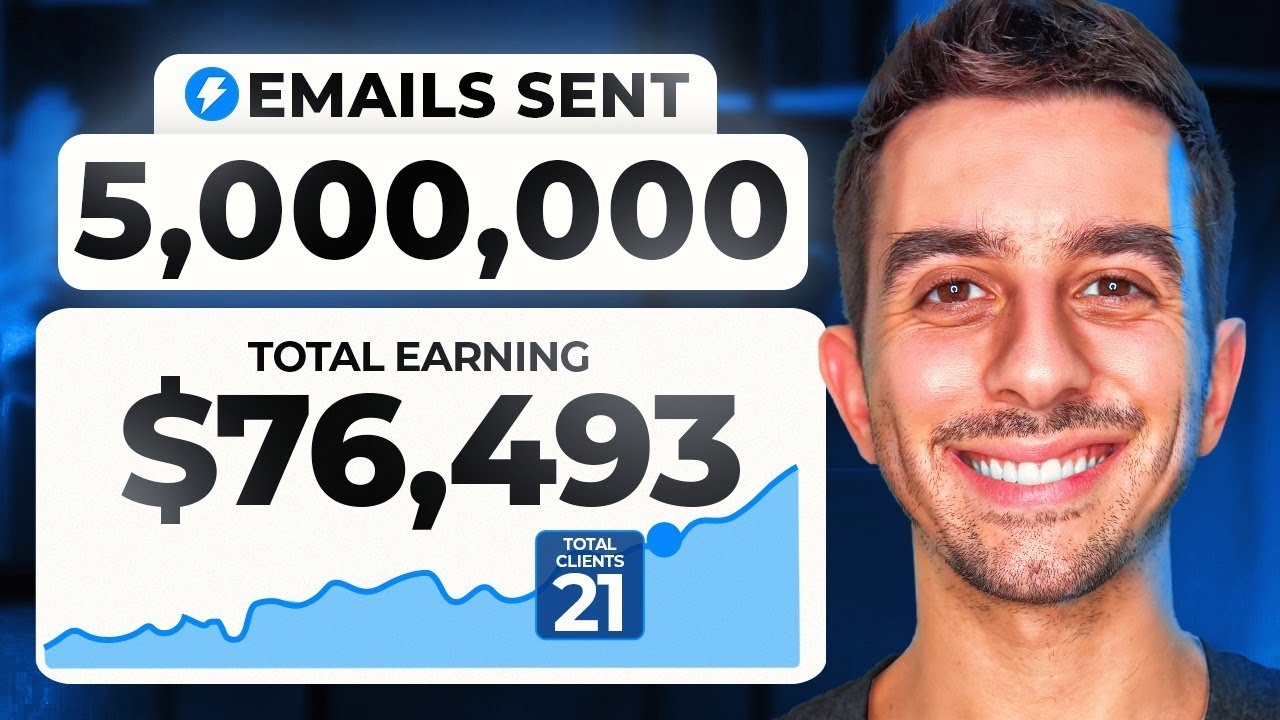
I’ve sent over 5 million cold emails. Across 60-plus B2B niches, ranging from IT managed services to SaaS to fractional CFOs to commercial cleaning companies. And after all of that, I can tell you with full confidence that whether a cold email campaign succeeds or fails almost always comes down to the same five factors.
Not copy. Not subject lines. Not whether you used “Hey” or “Hi” to open your email.
Five factors. And if even one of them is broken, the whole campaign struggles, no matter how good everything else is.
Here they are, in the order you should fix them.
Factor 1: Deliverability
I know. This isn’t the one you wanted me to start with. But deliverability is the least sexy and most important factor in cold email, and skipping it is the single reason most campaigns fail before they ever get a real chance.
Think about it this way: if your emails are landing in the spam folder, nothing else matters. You can have the best offer in the world, a perfectly targeted list, and copy that reads like it was written by the world’s greatest salesperson. None of it converts if you’re talking into a void.
The core infrastructure you need: dedicated sending domains (never send cold email from your primary business domain), a proper email warmup process on every inbox, and inbox rotation so no single address is carrying too much sending volume. The ceiling I use is 20 to 30 emails per day per inbox. Beyond that, you start looking like a bulk mailer to Gmail and Outlook.
Most campaigns I audit aren’t even landing in the inbox. Not because the copy is bad. Because the infrastructure was set up wrong, or it worked for six months and then degraded and nobody noticed.
Fix deliverability before you touch anything else. Everything else I’m about to describe only matters if your emails are actually reaching people.
For a deeper dive on the infrastructure side, I wrote a full breakdown of cold email deliverability in 2026: it covers the math on how many inboxes you need, domain setup, authentication, and how to diagnose when you’re landing in spam.
Factor 2: List Quality
The old computer science rule applies here: garbage in, garbage out.
Your list isn’t just a list of email addresses. It’s a list of specific people, at specific companies, at a specific moment in time. All three parts of that have to be right.
The right person means you’re reaching the actual decision-maker, not an admin, not someone three levels removed from the buying decision. For most of our campaigns, that means VP of Sales, Head of Marketing, CEO/Founder, or a specific department head depending on what we’re selling.
The right company means the business actually fits your ICP. Right size, right industry, right stage. Sending to a 5-person startup when your service requires a 50-person minimum sales team is wasted effort regardless of how good the email is.
Right time means using buying signals and triggers where possible. A company that just raised a Series A, just hired a new VP of Sales, or just posted three SDR job listings is a fundamentally different conversation than a company in maintenance mode. These triggers aren’t always available, but when they are, they dramatically improve performance.
Most people buy generic lists from Apollo or ZoomInfo and send to everyone in them without any of this filtering. That’s why their reply rates are 0.3% and they think cold email doesn’t work. It’s not the channel. It’s the list.
And verify your emails before you send. Bounce rates above 2% kill deliverability. We run every list through two layers of verification before a single email goes out.
Factor 3: Offer
This is where most campaigns live or die, and it’s the one most people get wrong in a way they can’t even see.
There’s a fundamental difference between a service and an offer.
“We do cold email outreach” is a service. It describes what you do. It does not describe what the prospect gets.
“We book 15 qualified sales calls per month for IT services companies targeting SMBs under 200 employees” is an offer. It describes a specific outcome, for a specific type of company, with a number attached to it.
The offer has to match what your specific ICP actually cares about. An IT services company targeting SMBs cares about booked calls with qualified decision-makers, not open rates or send volume. A SaaS company might care about demos booked. A consulting firm might care about inbound from qualified enterprise accounts. The offer you write should speak directly to that specific outcome, for that specific person.
When we work with clients on outbound strategy, we spend a significant amount of time on offer construction before we write a single word of copy. Because if the offer is wrong, no amount of clever writing fixes it. You’re just wordsmithing a bad message.
A weak offer reads like: “We help B2B companies grow revenue with cold email.” A strong offer reads like: “We booked 23 qualified demos in 60 days for a B2B SaaS company in the HR tech space.” One of those makes a prospect lean in. The other gets deleted.
Factor 4: Copy
Once your deliverability is solid, your list is clean, and your offer is specific, then copy matters. And the rules for cold email copy are different from every other kind of writing you’ve ever done.
Short. Under 75 words for the first email. Ideally under 60. If you’re writing a cold email that’s longer than a paragraph or two, you’ve already lost.
Conversational. It should sound like one human talking to one other human. Not like a marketing email. Not like a LinkedIn post. Like a real person reaching out because they noticed something specific about this particular prospect.
The fastest way to test whether your copy is doing this right: if your email could have been sent to 10,000 people without changing a single word, it will be treated like that. Spam filters are good at recognizing mass messaging. Humans are even better. Your copy should feel like it was written for one person, even when it’s going to 500.
Focus on specific pain points, not features. “Most IT services companies spend 80% of their time on reactive support and have nothing left for pipeline” lands differently than “We offer comprehensive outbound solutions for the IT space.” One speaks to something the prospect feels. The other is noise.
End with a question, not a statement or a call to action. “Does this match anything you’re dealing with?” generates more replies than “Book a call here.” Questions create conversation. Calls to action create pressure.
Our cold email copywriting framework goes into more detail on structure, first lines, and the specific patterns that consistently outperform.
Factor 5: Follow-Up
Here’s a statistic that should change how you run campaigns: 42% of replies come from follow-up emails. Not the first email. The follow-ups.
Most people send one or two emails, get no response, and declare that cold email doesn’t work for them. They’re quitting right before most of the replies would have come in.
The follow-up sequence I’ve found works best is four to six touches, spaced three to five days apart, with each email adding something new rather than just bumping the thread with “Just checking in.” A case study. A relevant insight. A lead magnet that’s actually useful. A breakup email at the end that creates some urgency without being manipulative.
The key phrase is “adding value at each step.” Every follow-up should give the prospect a reason to reply even if the first email didn’t land. A case study showing a result you got for a similar company. A piece of data they probably don’t have. A short question that surfaces a pain point they recognize.
The breakup email is often the highest reply-rate email in the sequence. Something like “I’ll stop reaching out after this, just wanted to see if [outcome you offer] was a priority before I closed your file.” People who were interested but kept meaning to reply often respond to the finality.
You can see how we structure full sequences in our cold email follow-up guide.
The Order Matters
Here’s the principle that ties all five together:
If all five of these aren’t working together, your campaign will struggle. Fix deliverability first, then list, then offer, then copy, then follow-up. That’s always the order.
I’ve seen campaigns with incredible copy that failed because the emails were going to spam. I’ve seen campaigns with solid deliverability and a great offer that failed because the list was full of wrong-fit companies. I’ve seen everything come together in the first four factors and then fail because people gave up after two emails.
The order is deliberate. Deliverability is the foundation. Nothing else sits on top of it if it’s broken. List quality is the next layer, even the best offer in the world won’t book meetings if it’s reaching the wrong people. Then offer, which is the core value proposition the whole campaign is built around. Then copy, which is how you communicate that offer. Then follow-up, which is how you capture the majority of the pipeline that doesn’t come from the first touch.
What This Looks Like in Practice
When we take on a new client at Revenue Boost, this is the audit we run first. Which of these five factors is the weak point? Almost always, we find at least two or three.
The most common pattern: deliverability is broken (sending from the primary domain, no real warmup, too many emails per inbox), list quality is low (generic data, no verification, no ICP filtering), and the offer is generic (“we help companies grow”). Fix all three and a campaign that was producing nothing starts booking meetings within two to three weeks.
You can see specific results from that process on our case studies page.
If you want us to run this audit on your current outreach, or build the whole system for you from scratch, the fastest way to start is to book a call. We’ll walk through where your campaign is breaking down and show you what needs to change.
Cold email works. It works in 2025 the same way it worked in 2020. The bar is higher, the rules are stricter, and the senders who understand these five factors are booking meetings every week. The ones who don’t are stuck wondering why the channel doesn’t work for them.
These five factors are the difference.
Watch Our Free Training
See the exact outbound system used across 600+ campaigns - no opt-in required.
Free Strategy Call
Ready to Build Predictable Revenue?
Book a free 1-on-1 strategy call and we'll map out a custom outbound plan for your business.
Book a Free Growth Call