I’ve been running outbound for seven years. I’ve watched cold email go from a channel that almost anyone could stumble into results with, to one that rewards precision and punishes laziness harder than ever before. What worked in 2022 through early 2024 just really doesn’t work anymore, and the numbers don’t lie. Reply rates have been declining year over year across every industry vertical we work in.
If your campaigns have gone quiet, or if you’re about to invest in cold email and want to understand the landscape before you start, this is what you need to know.
The Old Model (2020–2023): Why It Worked and Why It’s Dead
There was a window, roughly 2020 through 2023, where cold email was almost embarrassingly easy. The playbook was:
- Buy a massive list. 10,000 contacts minimum. 50,000 if you had the budget.
- Load one template.
- Blast everyone with the same email.
- Watch 5–10% reply rates come in with minimal effort.
I’m not exaggerating those numbers. We were seeing reply rates in that range consistently, even with fairly generic copy. The bar was low because the competition for inbox attention was low. Most businesses weren’t doing this yet.
That era is over. That same playbook now gets sub-1% reply rates on a good day, and more importantly, it actively destroys your sender reputation while you wait for those replies to never show up. You don’t just get bad results. You dig a hole that takes months to climb out of.
Why the Old Playbook Died
Three things killed it simultaneously, and together they made the old model unworkable.
Google and Microsoft massively improved spam filtering. The machine learning models these providers use to classify incoming mail have become dramatically more sophisticated. They’re not just pattern-matching on keywords anymore. They’re reading behavioral signals: does anyone reply to this sender? Do recipients interact with this email or immediately delete it? Is this exact email body hitting thousands of inboxes at once? The answer to all three questions for spray-and-pray campaigns is obvious, and they get flagged accordingly.
Everyone copied the playbook. By 2023, every founder with a SaaS product, every agency owner, every consultant had read the same cold email guides and was sending the same emails. Inboxes got saturated with “Hey [Name], I noticed you’re in [industry], most [job titles] we talk to struggle with [generic pain point]…” Your prospects have seen that opener five hundred times. The second they recognize the pattern, you’re in the trash.
AI-generated copy flooded the channel. The widespread availability of ChatGPT and similar tools lowered the barrier to sending high-volume personalized-seeming copy to near zero. Except prospects can tell immediately when something was generated by AI. There’s a flatness to it, a certain interchangeable quality. When everyone’s “personalization” sounds the same, personalization stops being a differentiator and starts being a reason to ignore the email faster.
The result: inboxes are noisier, filters are smarter, and prospects are more skeptical. The old model isn’t just underperforming: it’s a liability.
The New Model (2025–2026): Quality Over Quantity
Here’s what’s actually working now, and what we use inside our cold email outreach service for clients.
Smaller, more targeted lists. We’re talking 500 to 2,000 prospects per campaign, not 50,000. The average deal in a well-run B2B cold email campaign comes from a list that would have looked laughably small to a 2022 operator. The math that matters isn’t how many people you reach: it’s how many people you reach who are genuinely a fit and receive a message that’s relevant to their specific situation.
Signal-based targeting. This is the single biggest shift in how good outbound teams build lists right now. Instead of pulling everyone with the title “VP of Sales” in a given industry, we’re asking: who just raised a funding round? Who just posted a job opening for a role that signals a specific problem? Who just promoted someone into a position that suggests a strategic priority? These are triggers, events that create immediate relevance for an outreach message. When you reach someone two weeks after they raised a Series A with a message that speaks directly to the pipeline challenge that typically comes with that stage of growth, the response rate is a different number entirely.
Multiple targeted campaigns instead of one blast. Rather than treating your addressable market as one homogeneous audience, we segment by ICP persona, industry vertical, company stage, and trigger. Each segment gets its own campaign, its own positioning, its own copy. The extra work upfront pays off in response rates that justify the investment several times over.
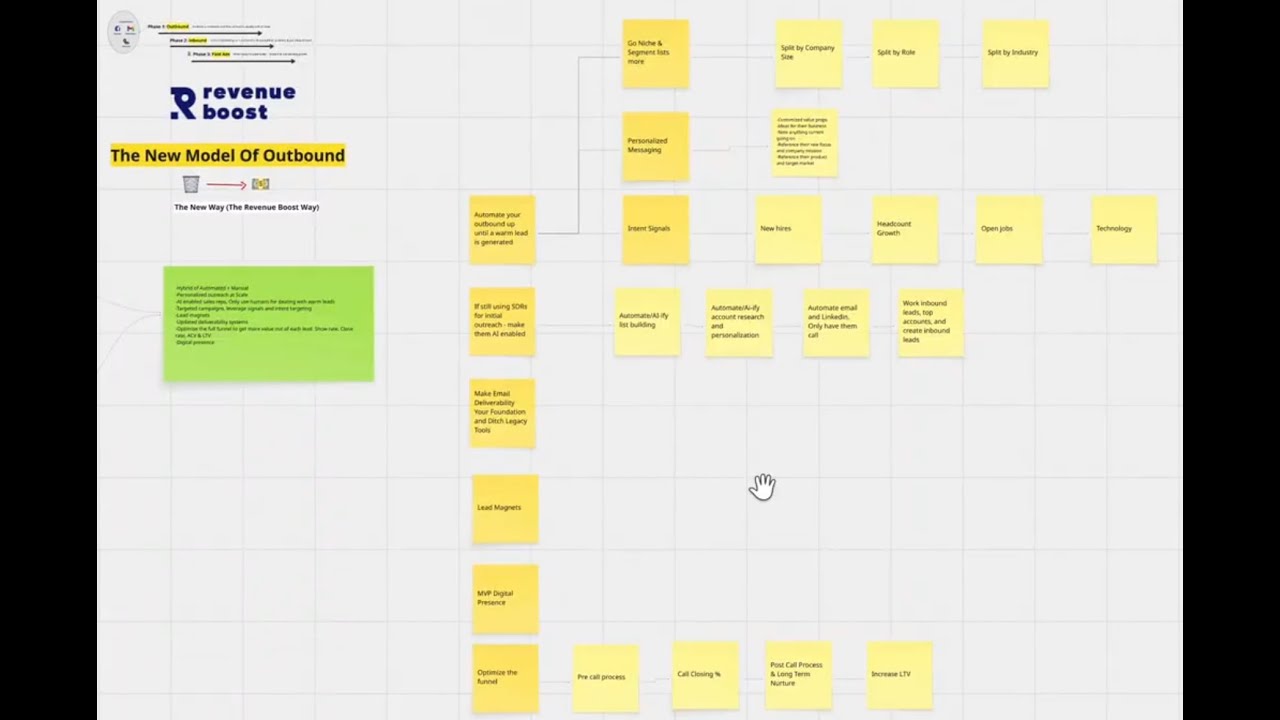
AI for research and personalization, not for writing. This is a distinction that matters. We use AI extensively, Clay, specifically: to research accounts at scale: pulling in company news, job postings, LinkedIn activity, funding data, and synthesizing it into first-line personalization that sounds like a human did the research. What we don’t do is use AI to write the email body. The copy itself goes through human review before it sends. Every time.
Primary inbox placement as baseline infrastructure. Deliverability used to be optional. Now it’s the price of admission. Dedicated sending domains, proper warmup, domain rotation, aligned SPF/DKIM/DMARC, if you don’t have the infrastructure right, the quality of everything else is irrelevant. You can have the best targeting and copy in the world and convert at zero if you’re landing in spam. Read our full breakdown of the 2026 deliverability requirements if you want the technical details.
Multi-channel amplification. Cold email is one channel, and it’s most effective when LinkedIn and calling reinforce it. When a prospect gets your email, sees a LinkedIn connection request or a relevant comment on a post they made, and then potentially gets a call, each touchpoint raises the probability that the others land. Email alone works. Email plus two supporting channels works measurably better.
What the Numbers Look Like Now
Old way, template blast to a massive unqualified list: 0.5–2% reply rate.
New way: targeted, signal-based, genuinely personalized, properly delivered: 5–15%+ reply rate.
That’s not a rounding error. That’s a different channel.
The honest answer to “is cold email dead?” is: cold email is not dead. Bad cold email is dead. The bar to do it well has raised substantially, but the ROI for the businesses doing it right is actually better than ever, because there’s less competition at the top. The people who adapted are booking more meetings, not fewer. The people who didn’t are looking at flat pipeline and blaming the channel.
The 3 Things That Define Successful Campaigns Now
After running campaigns across dozens of industries at Revenue Boost, I’ve distilled what separates the campaigns that produce 10–15% reply rates from the ones that limp along at 1%:
1. Hyper-specific ICP with richer, smaller lists. The more precisely you define who you’re reaching, the more precisely you can speak to their situation. “B2B SaaS” is not an ICP. “Series B SaaS companies with 50–200 employees targeting enterprise, where the CRO was promoted internally in the last 12 months” is an ICP. That specificity informs every downstream decision: targeting, copy, offer, follow-up.
2. A signal or trigger that creates immediate relevance. Every high-performing cold email campaign we run has a reason the prospect should care right now, not just in general. Funding, hiring, expansion, a public statement, a competitor move, something that makes your message feel timely rather than random.
3. Copy that sounds like one human talking to one specific other human. This sounds obvious. Almost no cold email does it. The test: if you took the name out of the email, could it have been sent to 10,000 people? If yes, it fails. If the email references something specific about this company, this person, this moment in their business: it passes.
What to Do Right Now
If your current campaigns aren’t producing, run an honest audit against these three failure points:
Are you sending to too broad an audience? Tighten the ICP. Pull a smaller list. Segment.
Is the copy generic? Read it like a skeptical prospect who’s seen a hundred cold emails this week. Does it say anything that couldn’t apply to every company in their category?
Is it landing in spam? Check your reply rate per inbox. If you have inboxes sending hundreds of emails with zero replies, they’re in spam, not landing in primary. The list doesn’t know. Only the inbox-level data tells you.
Those are the three most common failure points, and fixing them is how you move from a dead campaign to a live one. If you want a structured framework for how we approach this end-to-end, the Revenue On Demand Engine lays out the full system.
The Bottom Line
The drop in reply rates isn’t a cold email problem. It’s a lazy cold email problem. The businesses still seeing 10–15% reply rates are the ones who put real work into personalization and targeting. They’re using signals to identify prospects at the right moment. They’re writing copy that sounds human because a human actually wrote it, with research to back it up. And they’ve built the infrastructure that gets that copy into primary inboxes in the first place.
If your outbound results have stalled, the good news is the fix is identifiable. Book a call with us and we’ll audit your current campaigns, targeting, copy, deliverability, and tell you exactly where the leak is. Or if you’re starting from scratch and want a system that’s built for 2026 from day one, see what our outbound strategy service includes.
The channel works. The old playbook doesn’t. The businesses that understand the difference are going to outpace the ones still sending templates to 50,000-person lists by a widening margin in the next 12 months.
Watch Our Free Training
See the exact outbound system used across 600+ campaigns - no opt-in required.
Free Strategy Call
Ready to Build Predictable Revenue?
Book a free 1-on-1 strategy call and we'll map out a custom outbound plan for your business.
Book a Free Growth Call