Something is happening right now, and if you’re a business owner or a marketing and sales leader, you’ve probably felt it too. Digital marketing is changing fast. AI is changing fast. The way our customers buy is changing fast. It’s harder than ever to stand out, get attention, and ultimately get leads and sales.
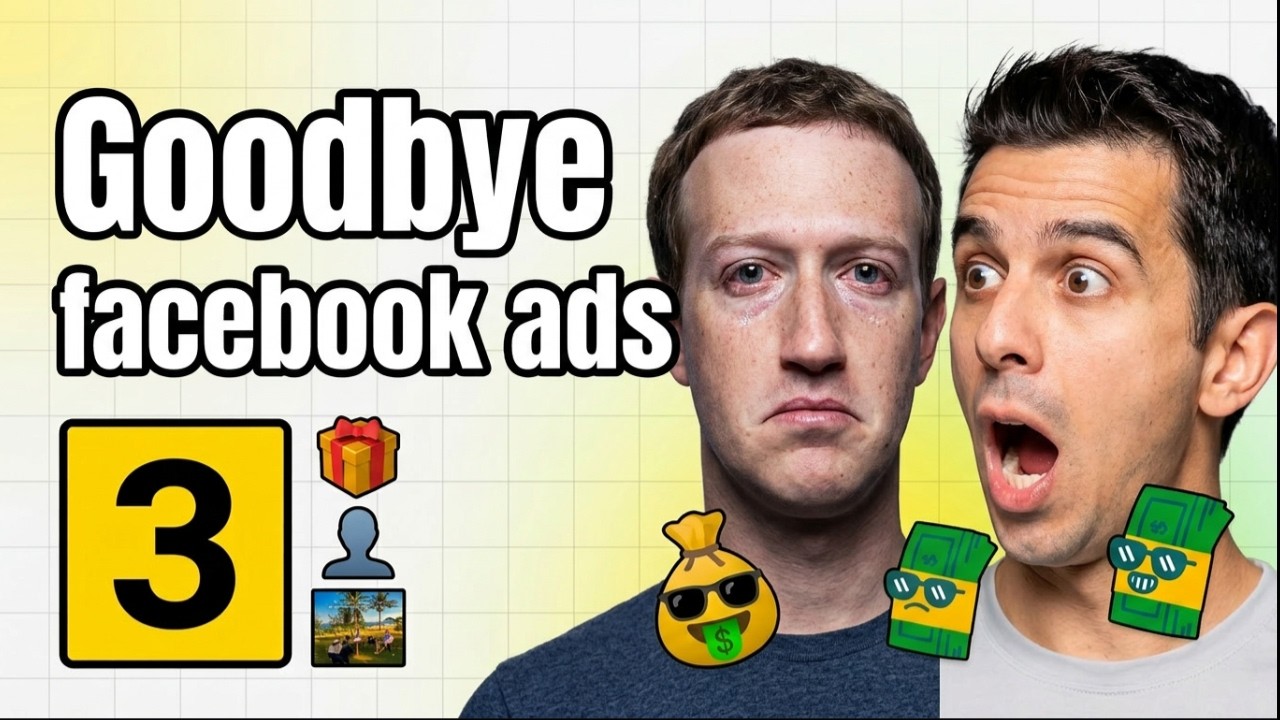
I’ve been doing marketing for 12 years, and I’ve never seen more change than in the last 18 months. And it’s not just AI. It’s the way consumer behavior has shifted underneath all of us. So I changed my strategy dramatically. I cut 80% of our PPC budget on Meta ads, dialed back how we run cold outbound, and reallocated all of it into three moves instead.
This isn’t theory. It’s what I’m seeing across the clients we work with in dozens of industries at Revenue Boost, and what I’m doing with my own marketing right now. Here are the three moves I’m making.
Why the Old Playbook Stopped Working
Before the three moves, you need to understand why they work. Three things changed at once, and together they rewired how buyers respond to marketing.
Prospects are far more hesitant to book a sales call. When you ask a CEO or a VP for 45 minutes, you’re not asking for something “free.” You’re asking for the most valuable thing they have: their time. To an executive whose hour is worth $500, a “free strategy call” costs $500. They’re busier than ever, and they’ve been burned by enough high-pressure calls to be wary of the next one.
Information distribution flipped. Twelve years ago, salespeople held the information. If you needed a fractional CFO or an HVAC tech in 1995, you booked a call because that’s where the insights lived. Today, information is everywhere. Buyers ask AI, watch YouTube, and follow companies on LinkedIn long before they ever talk to a human. If your model relies on people getting their information from your salespeople, you’re operating in the wrong decade.
The internet got noisier and faker. It’s been estimated that over half the content on LinkedIn is now AI-generated. Buyers are drowning in AI slop, burned out on webinars and high-pressure pitches, and more skeptical than they’ve ever been. When someone sees your ad, your cold email, or your video, they’re already coming in with their guard up.
Add it up and the picture is simple: attention is harder to win, and skepticism is higher. That doesn’t mean you quit. It means you have to work harder to earn both.
Marketing Comes Down to Two Things: Attention and Trust
I think people massively overcomplicate marketing. After 12 years, I’ve boiled it down to two jobs. You need attention to get people into your funnel, and you need trust to turn them into paying clients. That’s it.
What changed is that both got harder. Attention is harder because the internet is noisier. Trust is harder because buyers have more options than ever and many of them have already been burned: the bad agency, the $10K coaching program that went nowhere, the freelancer who disappeared. So the strategy shift is this: we’re relying less on pure direct response, like a single lead-gen blast, and more on brand and inbound. The three moves below all serve attention and trust.
Move #1: Custom Lead Magnets
We’re giving away more genuine, high-value help for free than ever before. But the kind of lead magnet that works has completely changed.
Your old lead magnets are dying, if they aren’t dead already. Ebooks, white papers, generic case studies are all low-value now, because AI can generate them in seconds, and most people don’t read long PDFs anymore anyway. Text-based magnets that AI can replicate no longer move anyone.
What works now is custom lead magnets: a short video walkthrough, a free mini-tool, a limited trial, or actual consulting and analysis delivered one-to-one. I call them “custom” because the prospect has to hop on a call to get it, and you build it for them. That carries a far higher perceived value, and it scratches the thing buyers actually want right now: to talk to a real person instead of reading more AI slop.
Here’s the quick exercise I give clients: look at your client onboarding process and find one small piece of it that solves a real problem on its own. That becomes your magnet. The three formats that consistently work are a diagnostic or audit, a small standalone piece of your system, or a limited-time trial of it. This is almost always the lever that fixes a stalled campaign. When our outreach isn’t booking calls, swapping in a strong custom lead magnet is usually what turns it around.
It’s exactly what we do ourselves. Book a call with us and we’ll build you a free go-to-market plan and outbound strategy, real work that people otherwise pay for. The bar to earn attention is higher now, so the value you lead with has to be higher too.
Move #2: Build a Real Personal Brand
This year I made the decision to stop doing content sporadically and commit to a consistent weekly rhythm. Here’s the thesis behind it: as the digital world becomes more artificial, people place a higher and higher premium on what’s real: real people, real content, real brands.
No one wants to read an AI-written post or hear from a faceless company. When I land on a website with no faces anywhere and an AI-sounding feed, I assume the whole thing is fake, and subconsciously your buyers do the same. There’s no better way to build trust than putting a real person in front of your business. If you genuinely won’t put your own face forward, hire someone who will. But don’t go faceless.
A few things I’ve learned the hard way:
- Consistency beats intensity. Platforms reward people who keep showing up and quietly punish those who go quiet. I know a creator who went viral, got overwhelmed, stopped posting, and couldn’t get the reach back when he returned. Start with three posts a week and build toward daily.
- Half-doing it is the real mistake. For years I posted good content but inconsistently. If you’re going to do personal brand, do it properly or don’t do it at all, and never pad it with low-effort AI slop. Either write something genuinely good or write nothing.
- Build content pillars and a calendar. Decide what you talk about, then show up on a schedule instead of whenever inspiration strikes.
People connect with people, not logos. Unless you’re Nike or Red Bull, your company brand isn’t building the trust you think it is. A real personal brand is.
Move #3: High-Quality Video Content (and Why I Cut 80% of My Ad Budget)
The third move is going all-in on high-production video, and it’s the reason I reallocated most of my paid budget.
Because buyers are now so primed to assume everything is fake, you have to do things that are clearly real. Nothing signals real like high-quality video: actual people, actual locations, actual conversations. So I’m shifting from being a solo creator to running a small media company, with a long-form editor, a short-form editor, and a content manager. I’m going pro with it.
Here’s the math on the ad cut. I was running Meta ads and we even closed our first client from them, so the campaign was technically profitable. But I realized that if I took 80% of that budget and put it into video production instead, I’d get far more out of it. The reason is leverage: paid ads buy you short-term leads and nothing else, but organic video gets you leads and builds your brand at the same time. You capture the short-term and the long-term benefit from the same spend. The day you turn paid ads off, the leads stop. The video keeps working.
Yes, it costs real time and money: crew, editing, locations, lights. But by building it into a repeatable operation instead of doing everything myself, we get more done, more consistently, with better results.
Where Outbound Still Fits
If you’ve followed me for a while, you know we’ve run thousands of cold email and outbound campaigns, so you might be wondering why outbound isn’t on the list. It still is. It’s just not the new thing I’m leaning into, and we now run it differently.
Cold email absolutely still works. We have clients for whom it’s the number one source of new business. But response rates have come down, so it takes more effort, creativity, and strategy than it did two years ago. Two adjustments make the difference:
- Lead with a lead magnet, not a calendar link. Instead of “Hey, let’s book a call,” our outbound now gives away those insanely valuable custom lead magnets. That single change consistently lifts results.
- Run inbound-led outbound. Don’t just blast cold lists. Reach out to people who already visited your site, downloaded your magnet, or followed you on LinkedIn. Tools like RB2B can surface the companies visiting your website so you can reach out warm. Some call it warm outreach. The point is you’re monetizing the attention your brand is already earning. This is where most creators leave money on the table: they have followers but never DM them or get them on a call.
There’s also a quieter reason brand makes outbound work better. When you cold email someone and they’re moderately interested, they check you out before they reply: your website, your LinkedIn, your content. If you’ve neglected your online presence, that lookup kills deals you’d otherwise win. A strong brand makes every outbound campaign convert better, because nobody books a call without looking you up first.
Balance Brand and Direct Response
The clean way to think about all of this: there are two kinds of marketing. Direct response pays the bills now: the ad that books a call, the cold email that lands a meeting. Brand protects you long-term: the content and presence that compound trust over a year or more.
Most marketers gravitate to direct response because it’s measurable and immediate. The problem is you’re not building anything durable. The day your ads get more expensive, your account gets flagged, or deliverability shifts, your lifeline shuts off. Brand is your protection mechanism in this new age, and the two reinforce each other, because good outbound makes people check a brand that then makes them more likely to buy.
So the answer isn’t to pick one. Your strategy needs direct response to pay the bills today and brand to protect and grow you tomorrow. If you’re heavy on one, lean into the other. Custom lead magnets, a real personal brand, and high-quality video are how I’m building the brand side, and they’re what I’m betting my own time and money on.
If you want help putting this into practice, that’s exactly what we do. Book a free call and my team and I will build you a personal go-to-market strategy and marketing plan at no cost. If you’d rather see what a working system looks like first, read through the results from clients we’ve worked with, or dig into how we structure the engine end-to-end in the Revenue On Demand Engine. And if outbound is where you want to start, here’s how we run outbound strategy and cold email outreach for 2026.
Watch Our Free Training
See the exact outbound system used across 600+ campaigns - no opt-in required.
Free Strategy Call
Ready to Build Predictable Revenue?
Book a free 1-on-1 strategy call and we'll map out a custom outbound plan for your business.
Book a Free Growth Call